Valorant Phoenix gameplay from Rawzu shows how to win aggressive duels with 400 DPI and 1440x1080 stretched
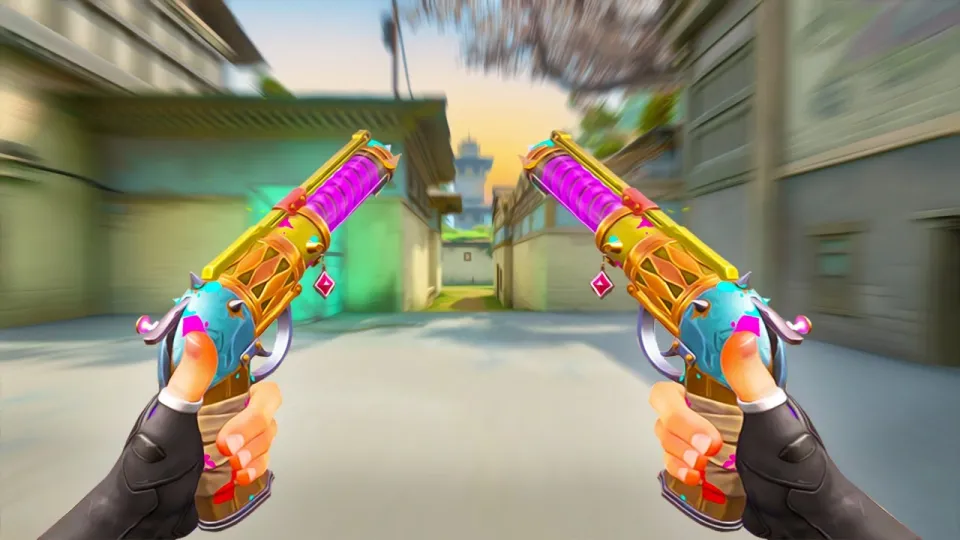
Video: 20 Minutes of Satisfying Valorant Clips
Need articles like this for your video? They help promote it on YouTube and Google — order them in the Telegram bot @sat_sit_bot. It writes articles around your video, embeds the video and publishes them on popular niche websites (no ads). Your first 50 articles are free.
· based on the channel Rawzu
Key takeaways
- Rawzu plays Phoenix with 400 DPI and 0.625 sensitivity, a 1440x1080 stretched resolution, and crosshair code 1-6-2-2.
- Phoenix is an offensive duelist: Blaze blocks vision and deals damage, Curveball blinds around corners, and Run it Back lets him take risky duels.
- The 20-minute clip compilation highlights movement speed, one-taps, and commentary from teammates on Lotus and Icebox.
- Viewers repeatedly ask about the exact DPI and sensitivity, which are listed in the video description.
- Rawzu streams daily on Kick at https://kick.com/rawzu and shares original music on Spotify.
Valorant is a 5v5 tactical shooter where agent abilities and gunplay decide rounds, and Phoenix remains one of the most direct duelists for players who want to take fights on their own terms. Rawzu, a Phoenix main who streams daily on Kick, builds his gameplay around fast movement, stretched resolution, and aggressive entry fragging. This breakdown uses his 20-minute satisfying clips compilation as a reference point for the settings, ability usage, and mindset that make that style work.
Why Phoenix rewards an aggressive Valorant playstyle
Phoenix is an offensive Valorant agent who specializes in hunting down enemies while crippling their ability to fire back. His kit is built for players who want to start fights rather than wait for them. Blaze creates a wall that blocks vision and deals damage, which lets Phoenix push through open areas that would normally be covered by a sniper or a Controller's smoke. Curveball flashes enemies even when they are hiding behind corners, so it works as a self-sufficient entry tool. Hot Hands gives him healing and area denial, and Run it Back lets him respawn at his original position after taking a duel, which lowers the risk of aggressive peeks. In combination, these abilities make Phoenix a durable duelist, and players who like to play aggressively will enjoy his gameplay.
Rawzu settings and peripherals for Valorant
Rawzu's settings are a big part of why his movement looks fast and his aim stays stable during chaotic fights. The exact values are published in the video description:
- Sensitivity: 400 DPI with 0.625 in-game sens.
- Resolution: 1440x1080 stretched.
- Crosshair: 1-6-2-2.
- Mouse: Lamzu Maya X.
- Mousepad: Zowie H-SR-SE 2 Blue.
- Monitor: Zowie XL2566K 360Hz.
A 400 DPI and 0.625 combination is on the lower end of the eDPI spectrum, which gives smooth tracking and controlled flicks. The 1440x1080 stretched resolution widens player models on screen, making it easier to see enemies at range while keeping the vertical field of view manageable. The 360Hz monitor matters for a duelist because it reduces motion blur during fast strafes and ability casts. None of these settings are magic on their own, but together they support the movement-heavy style shown in the clips.
How Rawzu uses Phoenix abilities in the clip compilation
Ability timing is what separates a Phoenix who trades kills from a Phoenix who opens rounds. In the 20-minute compilation, the pattern repeats: Blaze goes down first to cut off sightlines, then Curveball follows to blind anyone holding the angle, and Hot Hands is saved for healing or for blocking a retake path. Run it Back is used as a free entry tool rather than a panic button, which means Phoenix can take the first duel of a round without risking his life. That order matters. If you flash before walling, enemies can retreat behind cover; if you wall first and flash second, the blind lands on players who are already committed to the angle. The commentary from teammates in the clips often reacts to these sequences, and the most-liked moments are the ones where a single one-tap ends a round after an ability setup.
Movement, crosshair placement, and one-taps
Movement speed is the most common thing viewers notice in Rawzu's gameplay. Fast strafing between shots makes him a harder target, and it also forces enemies to adjust their crosshair mid-fight. Crosshair placement stays at head level even while moving, which is why so many kills in the compilation are one-taps rather than sprays. The crosshair code 1-6-2-2 produces a small, static reticle that does not distract during fast turns. For players trying to copy this style, the practical steps are:
- Keep the crosshair at neck or head height while clearing angles.
- Strafe between bursts instead of standing still.
- Use Blaze to block one angle at a time, not to split the map in half.
- Save Run it Back for the first contested duel of a round.
- Practice the same sensitivity for at least a week before changing it.
These habits are more important than any single setting, and they are visible in almost every round of the compilation.
Common questions from viewers about this Valorant style
Viewers who watch the clips often ask the same things: what DPI and sensitivity are used, how the movement stays so fast, and whether the gameplay is realistic for ranked. The DPI and sensitivity are listed in the description, so that question has a direct answer. The movement speed comes from constant strafing and from using abilities to cover the moments when Phoenix is most vulnerable. The question of realism is fair: clips are highlights, and enemies in a normal ranked match will shoot back and use their own game sense. That does not make the style invalid. It means the clips show the ceiling of what aggressive Phoenix play can look like when ability usage, movement, and aim line up. The supportive teammate commentary in the compilation also shows that this style works best when the team plays around the duelist rather than leaving him alone on site.
Maps and moments that stand out in the compilation
Lotus and Icebox appear in the clips, and both maps reward Phoenix's kit in different ways. Lotus has narrow chokes where Blaze can cut off a single angle and Curveball can blind players holding from elevation. Icebox has long sightlines and verticality, so the stretched resolution and fast strafing help Phoenix close distance without getting picked. The most satisfying moments in the compilation tend to be multi-kill rounds where Phoenix chains a wall, a flash, and a Run it Back entry into a site take. Gunplay philosophy matters here too: treating the Vandal as a one-tap weapon rather than a spray weapon changes how you position and how much time you spend exposed. That approach is visible in the cleanest kills of the video.
Useful links
- Daily streams: https://kick.com/rawzu
- Original music on Spotify: https://open.spotify.com/artist/6DbATPR1PTNMx7U918bg1Q
- Discord community: https://discord.gg/axnFwyvxp3
What this Valorant Phoenix breakdown shows
Rawzu's compilation is a useful reference for anyone trying to make Phoenix work in ranked. The settings are specific and published, the ability order is consistent, and the movement style is repeatable with practice. The channel Rawzu built around these clips also includes daily streams, original music, and a Discord community, so the gameplay is only one part of the content. If you want to see the style live rather than in highlights, the daily streams on Kick are the place to start. Copy the settings, practice the ability order, and expect enemies to shoot back — that is how the clips translate into actual improvement.
Source: 20 Minutes of Satisfying Valorant Clips · Markdown version
Questions & answers
What sensitivity and DPI does Rawzu use in Valorant?
Rawzu uses 400 DPI with 0.625 in-game sensitivity. His resolution is 1440x1080 stretched, and his crosshair code is 1-6-2-2. These values are listed in the video description, so you can copy them directly into your own settings.
Is Phoenix a good agent for aggressive players in Valorant?
Yes. Phoenix is designed as an offensive duelist. Blaze blocks vision and deals damage, Curveball blinds enemies even behind corners, and Run it Back lets him take risky duels and respawn safely. Players who prefer to start fights rather than hold angles get the most value from his kit.
Why does Rawzu's movement look faster than normal Valorant gameplay?
The speed comes from constant strafing between shots and from using abilities to cover vulnerable moments. The 1440x1080 stretched resolution and 360Hz monitor also make the motion look smoother on stream. It is a practiced habit, not a hidden setting.
Can I copy this playstyle in ranked matches?
You can copy the settings and the ability order, but expect enemies to shoot back and use their own game sense. The clips show the ceiling of aggressive Phoenix play, not an average ranked round. Practice the wall-flash-entry sequence and keep your crosshair at head level.